
One of the joys of traveling is ample duty-free shopping, but violating customs declaration regulations for NEW CAMELLIA FERRY travel to Japan can cause your enjoyable trip to go awry right from the start. We have compiled a detailed summary of the latest duty-free regulations for 2026 and tips on bringing in alcohol
NEW CAMELLIA FERRY One of the great joys of traveling is duty-free shopping, taking advantage of the much more generous baggage allowance compared to air travel. However, if you do not fully understand the customs declaration regulations for ferry travel to Japan, you may face the misfortune of paying unexpected customs duties or having your items confiscated right from the start of your enjoyable trip.
In particular, when entering Japan with items picked up at the Busan Port duty-free pickup point, you must remember that Japanese customs standards differ from those of Korea. We have compiled a detailed summary of the latest duty-free regulations, tips for bringing in alcohol, and know-how on the fastest way to clear customs at Hakata Port.
📌 3-Line Summary of Japan Entry Customs Declaration ✔️ Japan Customs Declaration: 3-Line Summary
✅ Alcohol: Up to 3 bottles per person are allowed, which is why boat travel is attractive to travelers who enjoy whiskey or sake.
✅ Tobacco: Up to 200 cigarettes (1 carton) are allowed based on standard cigarettes.
✅ Note: Duty-free shopping for alcohol and tobacco does not apply to minors under the age of 20, and cash payment in Japanese Yenis accepted for alcohol purchases at onboard duty-free shops.
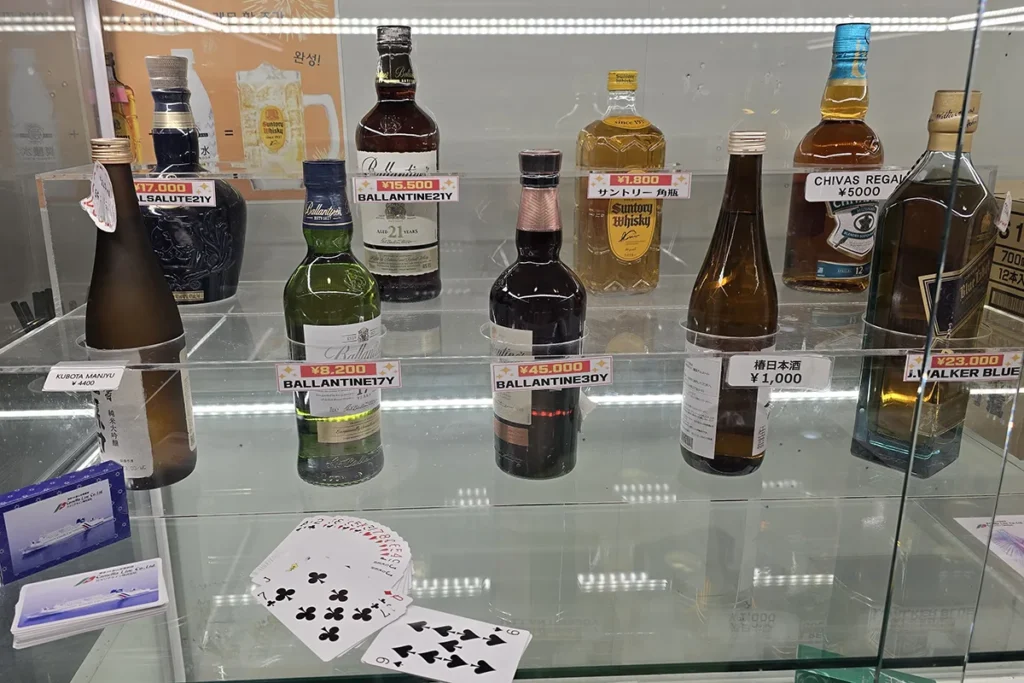
1. Duty-Free Limits for Entry into Japan: Key Summary by Item
The duty-free customs declaration limits for ferry travel to Japan differ from those for entry into Korea, so you must determine the exact quantity of each item. Generally, duty-free benefits apply only if the total value of goods purchased overseas is 200,000 yen or less
- Age Restrictions and Payment Tips: Duty-free shopping for alcohol and tobacco does not apply to minors under the age of 20. Also, NEW CAMELLIA FERRY purchases of alcohol and other items at can only be made in Japanese Yen cash.
- Alcohol Import Regulations (Biggest Advantage): Duty-free alcohol is allowed up to **3 bottles per person (760ml per bottle)** upon entry into Japan. This is more generous than the 2-bottle limit for entry into Korea, making ship travel very attractive for travelers who enjoy whiskey or sake.
- Tobacco Products: Tax exemption applies up to 200 cigarettes (1 carton) based on standard cigarettes. Standards may vary depending on the type, such as heated tobacco products, so verification is required.
- Perfume: Up to 2 ounces (approx. 56 ml) is eligible for duty-free allowance.
- Aggregation of Other Items: The combined price of items other than those listed above must not exceed 200,000 yen. Please note that if the price of a single high-value item (e.g., a luxury bag) exceeds 200,000 yen, tax will be levied on the total price of the items.
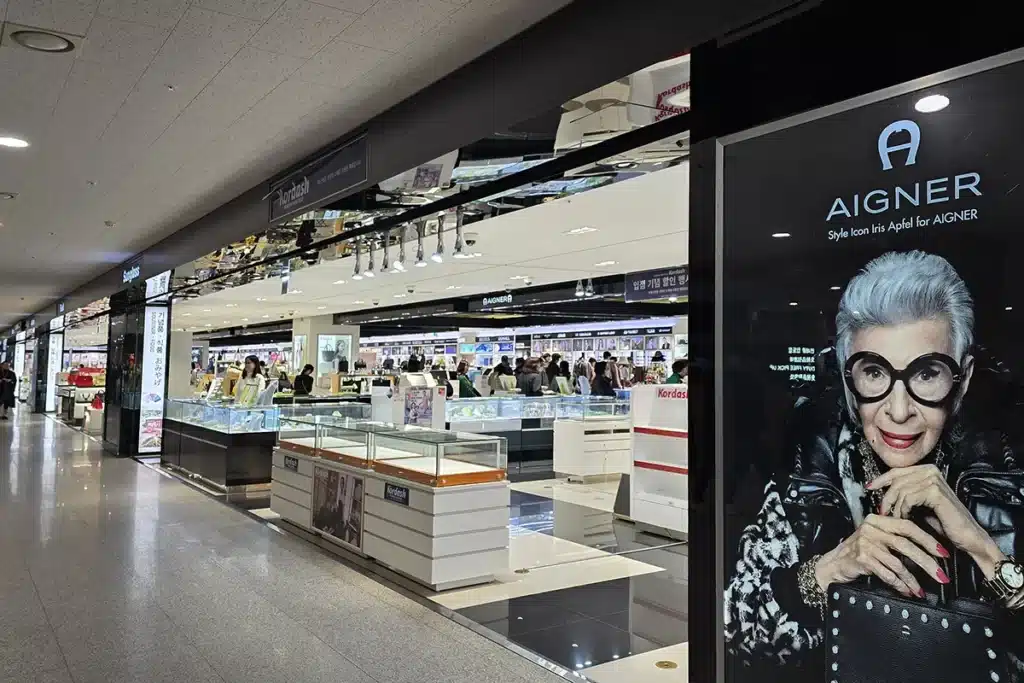
- ❤️ Check customs duties & baggage weight in advance with the Japan Shopping Safety Calculator! 👇
2. Hakata Port Customs Declaration Form Filling Out and Passing Through Customs (Hakata Port Customs Declaration Tips)
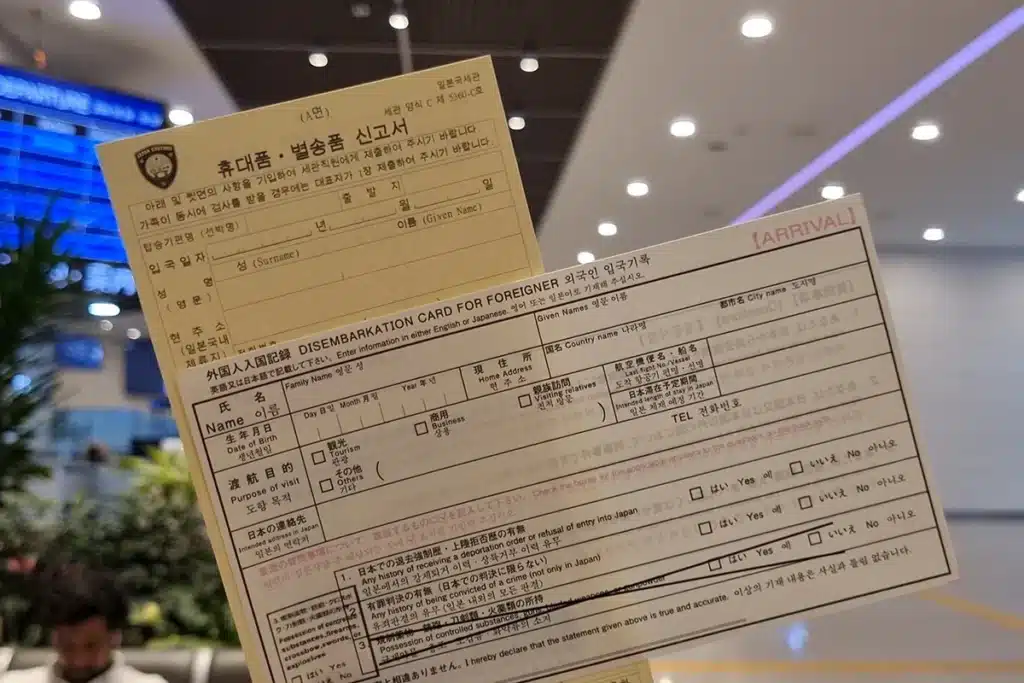
When entering Japan via ship travel through Hakata Port, you must complete the customs declaration using the paper declaration form distributed during the process (as of 2026). Since customs inspections are conducted on a family basis, the family representative must fill out the form and indicate the number of accompanying family members.
- Filling out the paper declaration form (Declaration of personal belongings and unaccompanied baggage): Japanese customs generally require the completion and submission of one yellow paper declaration form per family. The smartest method is to fill it out in advance near your cabin or the information desk after boarding.
- Input Information for Ship Travelers: When filling out the customs declaration form, please enter the vessel name as **'CAMELLIA'**. Due to the nature of Hakata Port, where arriving passengers disembark all at once, you must complete all necessary documents before disembarking to avoid waiting in line again at the customs inspection counter due to missing information.
- Importance of Voluntary Declaration: If you have exceeded the duty-free limit by even a small amount, it is advisable to honestly declare it voluntarily. Voluntarily declaring during customs clearance for ship travel to Japan simplifies the process and applies reasonable tax rates; however, if you are caught intentionally concealing items, you face not only strict taxation but also the disadvantage of being blacklisted for future entry into Japan.
- ❤️ Check out how to secure NEW CAMELLIA FERRY BOARDING PASS at the lowest price first 👇
- 🧡 Also check the check-in and boarding guide NEW CAMELLIA FERRY you must verify before boarding 👇
- ❤️ How to fill out the customs declaration form for a ferry trip to Japan? Just read this and you'll be done in one go!👇
✈️ Notice for Foreign Travelers: Customs & Duty-Free Guide
TRAVELWING supports special benefits exclusively for foreign independent travelers and a smart, simple payment system that allows you to use our services conveniently without the need for Korean mobile phone identity verification or adding our KakaoTalk channel. Please check the information below and start a more affordable trip to Fukuoka by booking NEW CAMELLIA FERRY !
🛍️ Duty-Free & Customs Tips (Essential Guide to Customs and Duty-Free)
✅ Keep Your Duty-Free Receipts: Items purchased at Busan Port duty-free shops or onboard duty-free shops may be subject to customs inspection upon entry into Japan, so it is safer to keep the receipts with your passport rather than throwing them away.
✅ Gold & Luxury Goods Declaration: Japanese Customs strictly inspects for the smuggling of precious metals (gold necklaces, bracelets, etc.). If you are wearing expensive gold products or the total value exceeds 200,000 yen, you must make a voluntary declaration on the yellow paper declaration form to avoid any penalties.
✅ Strict Meat Product Ban: Not only sausages, jerky, and ham, but even the meat ingredients found in Korean ramen soup packets may be subject to confiscation during customs clearance at Hakata Port in Japan. Please be sure to check the ingredient list when importing food products.
💳 Easy Payment & Local Port Taxes (Foreign currency card ALL-INCLUSIVE ONE-STOP PAYMENT )
✅ All-Inclusive One-Stop Payment (Zero On-Site Payment Burden): TRAVELWING using an overseas credit card, covering the total amount including the Busan-Fukuoka round-trip BOARDING PASS, FUEL SURCHARGE, and port tax ALL-INCLUSIVE ONE-STOP PAYMENTmake
✅ No Cash Required at Hakata Port: There is no need to panic about running out of cash in front of the Yen-only ticket machines at Hakata Port Terminal in Japan. Complete all tax payments in advance and simply present your passport at the terminal counter on the day to quickly receive your boarding pass.
✅ Onboard Duty-Free Cash Notice: NEW CAMELLIA FERRY Card payments are accepted at but only Japanese Yen cash (banknotes and coins) can be used to purchase alcohol, tobacco, etc. at the onboard duty-free shops. We recommend preparing some Yen change before boarding.
🗒️ Checklist for International Passengers (Essential Pre-Board Checklist)
✅ Mandatory Visit Japan Web (VJW) Registration: We strongly recommend registering your Visit Japan Web QR code in advance to streamline entry procedures in Japan in accordance with the latest standards as of 2026. By utilizing your waiting time at Busan Port to prepare ahead, you can significantly reduce the time required for immigration clearance upon arrival in Japan.
✅ Mandatory and Accurate Passport Information: TRAVELWING official website requires customers to manually enter their passport information when making a reservation. You must accurately enter your passport information when making a payment. Please check carefully, as boarding may be denied if the entered information does not match your actual passport details.
✅ Email Confirmation Ticket: Once your reservation and payment are complete, a reservation confirmation (E-Ticket) will be sent to the email address you provided. You can conveniently check your inbox for presentation at the terminal counter and to verify your itinerary.
3. Prohibited and Cautionary Items: Meat and Gold Restrictions
Surprisingly, many people make the mistake of bringing in food and precious metals when declaring goods at customs for ship travel to Japan. Japan applies the strictest standards in the world regarding the import of agricultural, marine, and livestock products.
- Complete ban on processed meat products: Most processed foods containing meat, such as sausages, jerky, ham, and braised meat, are prohibited from being brought in regardless of ingredients or whether they have been cooked. In particular, the meat ingredients in ramen souppackets may be strictly checked, so if you plan to bring Korean ramen, we recommend checking the ingredient list or using local convenience stores in Japan.
- Fresh Fruits and Vegetables: The import of most fresh fruits and vegetables is restricted to prevent the introduction of pests and diseases. Consuming them on board is permitted, but taking them out of Hakata Port Customs is prohibited.
- Carrying large amounts of cash and gold: If you are carrying cash of 1 million yen or more or **'gold' products (gold bars, gold jewelry, etc.)** regardless of purity, you must declare them to customs.
- Caution Regarding Gold Jewelry: Inspections for gold smuggling have recently been significantly strengthened. Even expensive gold necklaces or bracelets that you normally wear may cause problems upon entry if the gold is of high value. It is safer to leave high-value gold items in Korea if possible, or to check relevant regulations and declare them voluntarily upon arrival.

4. NEW CAMELLIA FERRY Tips for Utilizing Ferry Baggage Allowance
The biggest advantage of NEW CAMELLIA FERRY is its overwhelmingly generous baggage allowance compared to airlines. If you take advantage of this, you can shop wisely within the customs duty-free limit.
- Free baggage allowance: You only need to meet the conditions of a weight of 30kg per person and a total length/width/height of 200cm or less
- No restrictions on liquids: Unlike on airplanes, you can freely pack liquids (cosmetics, beverages, alcohol, etc.) in your checked baggage without volume limits. If you wish to buy large-volume cosmetics or a wide variety of beverages to your heart's content in Japan, try combining these generous baggage regulations with the duty-free allowance.
- 👇 I would like to know the baggage regulations NEW CAMELLIA FERRY in more detail. 👇
5. Editor's Recommendation: The Finishing Touch to Smart Shopping
Customs declaration for a ship trip to Japan is the final gateway marking the beginning of your journey. If you simply remember the rule that "duty-free allowances are based on Japanese standards, and the declaration form must be completed on board," your time leaving Hakata Port's arrival hall will be much more enjoyable and effortless. In particular, the duty-free benefit for three bottles of alcohol is a privilege exclusively available to ship travelers, so be sure not to miss out.
- 👇Click here for further questions regarding reservations or boarding! 👇
- 👇Level up your cafe membership and become a KakaoTalk friend to receive a flood of extra discount coupons! 👇